
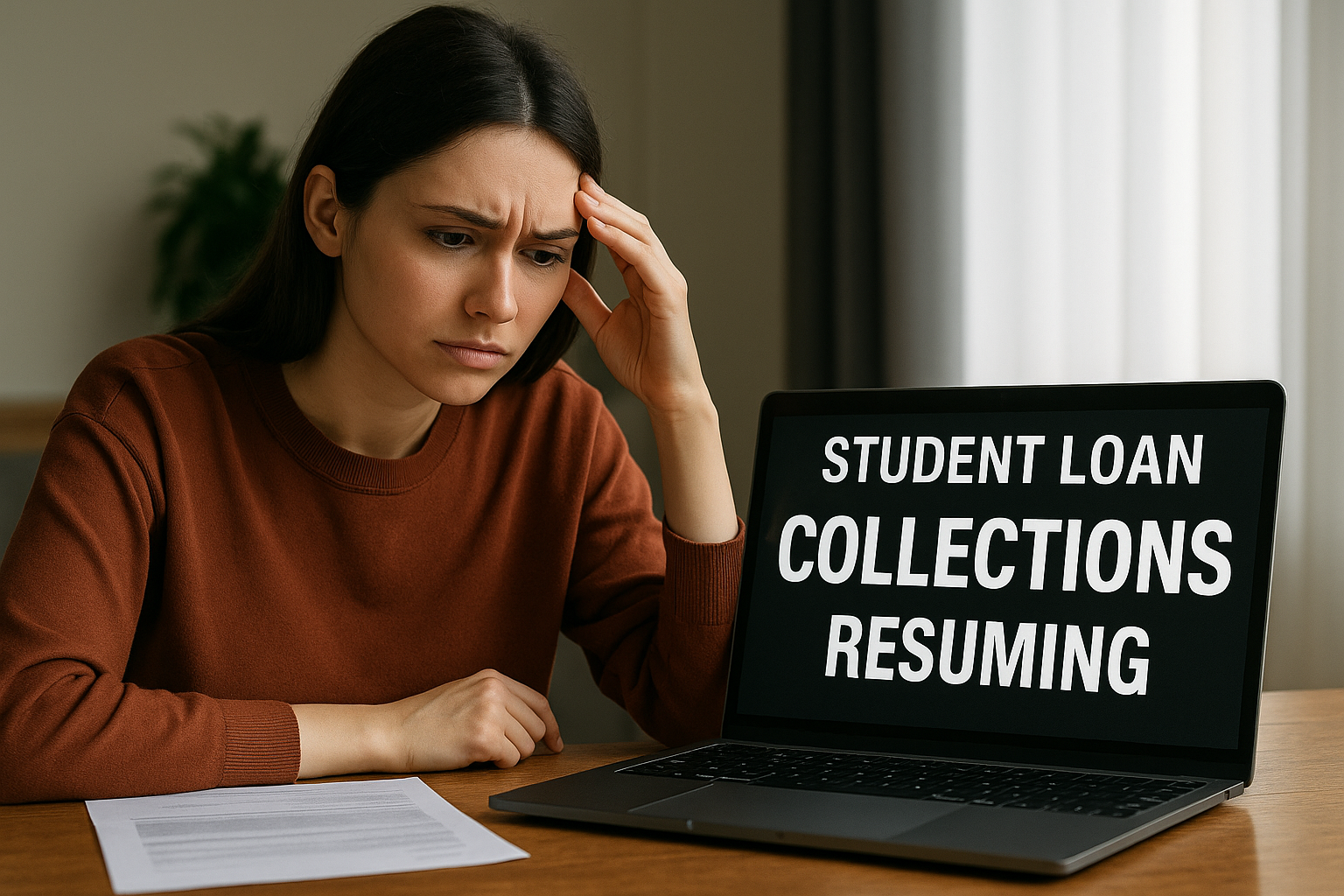
After a years-long pause on federal student loan payments due to the COVID-19 pandemic and subsequent policy changes, the U.S. Department of Education (DOE) has announced that it will resume collections on defaulted federal student loans in the coming weeks. This decision impacts more than 5 million borrowers and could significantly shape the landscape of higher education finance and borrower well-being in 2025.
This blog provides a comprehensive overview of what this means for borrowers, the timeline of these collections, the potential consequences, and the options available to those affected.
Background: The Student Loan Pause and Its Evolution
The federal student loan payment pause began in March 2020 as emergency relief. During this period:
- No payments were required
- Interest rates were set to 0%
- Collection efforts were halted
The pause lasted over three years. But after the Supreme Court struck down broader forgiveness plans in 2023, the DOE refocused on resuming standard loan procedures.
The 2025 Collections Restart: What We Know

The DOE will resume collections on over $120 billion in defaulted federal student loans beginning May 2025.
Who is Affected?
Over 5 million borrowers whose loans have been in default are subject to these collection efforts.
Types of Loans Affected:
- Direct Loans
- Federal Family Education Loans (FFEL)
- Perkins Loans held by the DOE
Key Dates:
- April 2025: Final borrower notifications
- May 2025: Collections begin
- July 2025: Full-scale enforcement
Consequences of Default
- Wage Garnishment: Up to 15% of income
- Tax Refund Seizure: Federal/state returns can be taken
- Social Security Offsets: May be withheld
- Negative Credit Reporting: Default status damages credit
- Loss of Federal Aid Eligibility
Borrower Protections and Options
1. Fresh Start Program
Allows defaulted borrowers to return to good standing. Benefits include:
- Eligibility for federal aid
- Preventing wage garnishment
- Removing default from credit reports
2. Loan Rehabilitation
Make 9 on-time payments in 10 months to remove default status.
3. Loan Consolidation
Combine loans into one Direct Consolidation Loan to exit default immediately.
4. Income-Driven Repayment (IDR) Plans
Base payments on income and possibly get forgiveness in 20–25 years.
5. Hardship Options
Request temporary forbearance or deferment (though these don’t remove default).
How to Prepare If You’re in Default
- Check loan status at studentaid.gov
- Update your contact info
- Explore Fresh Start, consolidation, or rehab
- Contact your loan servicer
- Beware of scams — only use official sites
Implications for the Future
This restart could influence:
- Higher education policy
- The 2025 election landscape
- Financial well-being of 40+ million borrowers
Advocates worry it may harm vulnerable groups, sparking renewed calls for systemic reform.
Conclusion
As collections resume in 2025, understanding your rights and options is key. A proactive approach can help protect your wages, refunds, and credit score.
Take action now—before collections begin—and take control of your financial future.